Description
Charles Daly 601 Field
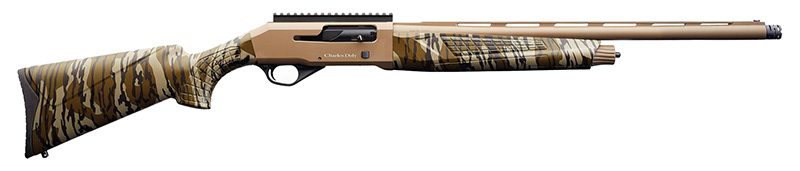
The 601 Field is a semi-automatic 12 gauge shotgun with a 24-inch vent rib barrel, an FDE-finished aluminum receiver, and a Mossy Oak Bottomland synthetic stock, aimed at waterfowl and upland hunters who want a specific concealment pattern rather than a generic camo print.
Specs
- Gauge: 12, 3-inch chamber
- Barrel length: 24 inches, vent rib
- Capacity: 4+1 rounds
- Action: Semi-auto
- Safety: Manual thumb
- Sights: Fiber optic front, Picatinny rail rear
- Chokes included: Modified, Full, Extra-Full Extended
The rear Picatinny rail is the standout addition on this model over a plain field gun: it lets a hunter mount a red dot for turkey hunting, where a fast sight picture on a moving target matters more than a bead alone, without needing a separate rail adapter purchase. The fiber optic front sight remains fully usable on its own for wingshooting, where an optic isn’t the right tool but a bright, fast front sight is.
Three choke tubes ship in the box, covering a practical range from close-range upland flushes to longer waterfowl or turkey shots, which removes a separate choke-buying step most shotgun owners handle after the initial purchase. The FDE receiver over the Mossy Oak Bottomland stock gives the gun a two-tone look built around actual concealment performance in the specific cover Bottomland is designed for, rather than a cosmetic camo pattern chosen for looks alone.
An aluminum receiver keeps overall weight down compared to a steel-receiver equivalent, which matters over a long day of carrying the gun afield rather than shooting it from a fixed blind. This is a shotgun built for a hunter who wants one gun that covers wingshooting and an optic-assisted turkey hunt without owning two separate shotguns.
A semi-auto action in a hunting shotgun trades a small amount of mechanical simplicity, compared to a pump gun, for meaningfully faster follow-up shots and reduced felt recoil, since some of the recoil energy that would otherwise reach the shooter’s shoulder goes into cycling the action instead. That matters most on a longer hunt where shot volume adds up, or on a fast-flushing covey where a quick second or third shot genuinely changes the outcome of the hunt. The FDE-and-Bottomland color scheme is a practical choice as much as an aesthetic one, keeping the receiver visually distinct from the stock while both stay within a concealment-oriented palette rather than a high-visibility finish. Storage and transport are also worth planning for separately from the gun itself: a hard case sized for a 24-inch-barreled semi-auto keeps the shotgun protected in a truck bed or on a boat, and is a reasonable add-on purchase alongside a gun intended for regular field use rather than occasional range trips.


